Compare industrial floor coatings and chemical surface densifiers to choose the best concrete protection strategy for your manufacturing or warehouse facility.
Introduction
When it comes to protecting industrial concrete floors, facility managers face a critical decision. High-traffic manufacturing plants, distribution hubs, and processing zones subject concrete to extreme stress—including multi-ton forklift loads, chemical spills, and non-stop abrasive wear.
To keep these floors from breaking down, you must protect them. The two most common industrial methods are topical floor coatings (like epoxies or urethanes) and chemical surface densifiers (like lithium-silicate treatments). Understanding the functional differences between these two approaches is essential to maximize your property’s lifespan and budget.
Topical Industrial Coatings: The Protective Shell
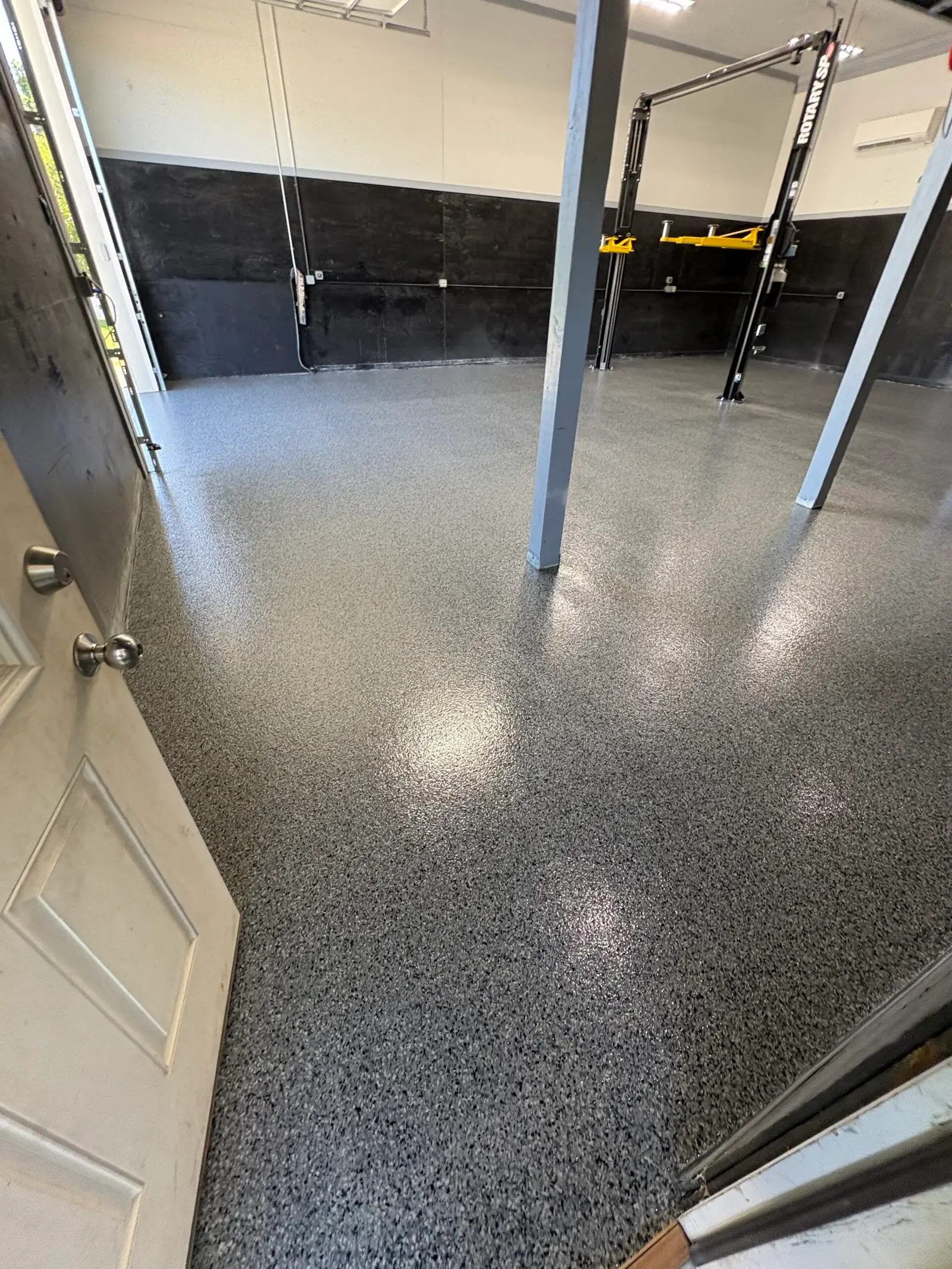
Topical coatings work by creating a thick, solid layer directly on top of the concrete slab.
- How They Work: These liquid polymers are rolled or sprayed onto the surface, curing into a dense plastic barrier that completely hides the raw concrete underneath.
- Best Use Cases: Because they form a solid barrier, coatings are ideal for environments that handle extreme chemical spills, aviation fluids, or areas requiring strict clinical sanitation and seamless slip-resistant colors.
- The Limitation: Coatings sit on top of the concrete. This means constant tire scraping from heavy forklifts can eventually cause the layer to chip, peel, or delaminate, requiring expensive stripping and re-application every few years.
Chemical Densifiers: Structural Vitrification
Instead of adding a new layer on top, chemical densifiers permanently alter the existing concrete from within.
- How They Work: A premium densifier like Fortify Pro™ penetrates deep into the concrete’s open microscopic pores. It triggers a chemical reaction with the raw cement minerals, turning soft compounds into a hard, crystalline structure that fills the pores.
- Best Use Cases: This method is ideal for massive distribution warehouses, fleet parking zones, and high-volume fulfillment centers. It turns the concrete floor into a stone-solid surface that can never peel or chip because the protection is inside the slab itself.
- The Operational Win: Densifiers completely eliminate concrete dusting, dramatically increase impact resistance, and actually become shinier and more polished over time as forklift traffic rolls over them.
Making the Strategic Choice
Choosing between a coating and a densifier depends entirely on your operational challenges. If your facility deals with continuous chemical drops and requires bright, color-coded safety zones, a topical coating system is your best path. However, if your goal is long-term structural durability, zero concrete dusting, and minimal lifetime maintenance costs under heavy machinery traffic, a chemical densification program is the most efficient financial investment.